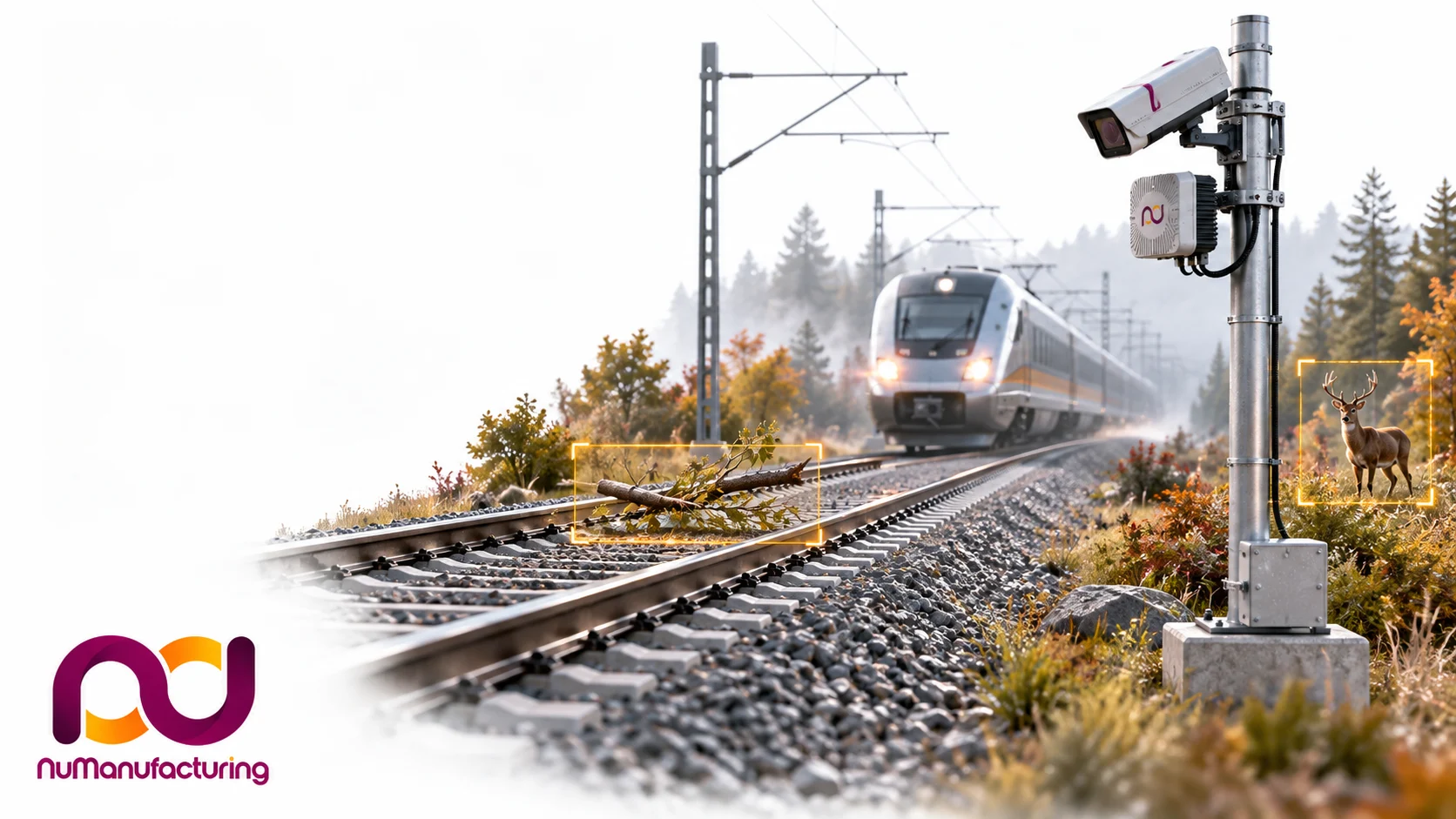
A sensing approach that evaluates changing field conditions together.
Light, visibility and weather change in a railway environment. Camera data is evaluated together with thermal imaging, radar or other suitable sensors, depending on the use case.
The sensor combination is chosen according to the target obstacle type, operating range, train speed and installation location. The contribution of sensor fusion and the limits of the system are measured under different field conditions.
Visual information
Object appearance, classification and visual assessment of the event.
Complementary measurements
Distance, motion or thermal information, depending on the selected sensor.
Joint assessment
Analysis of sensor results together with time, location and the relevant track section.
Events defined around your operational priorities.
Target classes within the pilot are defined together with the operator’s risk scenarios and field data.
Person on the track
Animal on the track
Vehicle stopped at a level crossing
Foreign object in the clearance corridor
Unauthorised entry into defined areas
Target object size, detection range, visibility conditions and evaluation criteria are defined separately for each class.
These are example scenarios that can be scoped in a pilot.
On the train or at critical points along the line.
On-Train Detection
Considered for monitoring the clearance corridor ahead of the train. Sensor placement and processing infrastructure are designed around speed, field of view, vibration, positioning information and vehicle integration requirements.
Design inputs
Train speed and required viewing distance
Sensor field of view and mounting conditions
Position and time information
Operator interface and alert flow
The corridor ahead of the train is monitored
Sensors are mounted at the front of the train
The Edge AI processing unit is on board
Trackside Detection
Considered for monitoring specific zones such as level crossings, tunnel portals and priority line sections. Events are linked to the relevant field point and passed to operations teams.
Design inputs
Zone to be monitored and coverage area
Power and communications infrastructure
Environmental conditions
Central monitoring and response workflow
Pole-mounted sensors cover the track zone
The Edge AI unit is located trackside
Events are linked to the relevant field point
Process data on site and deliver event information to the right team.
The aim is to process sensor data on site on the NumBox Edge AI platform. Processing hardware and model selection follow the required detection performance and the end-to-end latency budget. The Physical AI approach connects observations from the physical environment with operational decisions; this pilot produces event information for operator assessment, not automatic intervention.
Sensor data
Edge AI analysis
Event classification
Correlation with location and time
Operator notification
Event information
Event type
Time and site location
Model confidence score
Visual evidence where appropriate
Operator review status
The items above are data fields; they are not real event records or live data.
A pilot designed for operator decision support.
The scope of the first pilot is defined as hazard awareness and operator alerting. Integration with existing monitoring systems is planned according to the operator’s operational and data requirements.
Any connection to automatic braking or safety-critical signalling is assessed under separate safety engineering, validation and relevant conformity processes.
Measure performance in real operating conditions.
During the PoC, missed hazards and false alarms are evaluated alongside correctly detected events. Success criteria are defined with the operator before the pilot begins.
Measurement topics
Detection success by hazard class
Classification performance
Detection range
End-to-end alert latency
False alarms per operating hour or kilometre
Performance at night, by day and in different weather conditions
Behaviour during connectivity loss and system availability
Weather conditions
Which scenarios, such as rain, fog, snow and low light, will be tested is determined in the pilot plan according to site and seasonal conditions.