METRO AND TUNNEL SOLUTIONS
Monitor energy, airflow and water leaks together.
Numanufacturing develops Sensor Fusion and Edge AI based solutions that help metro and tunnel operators understand infrastructure conditions, improve energy use and identify maintenance needs early.
Turn field data into operational information. Support maintenance and operating decisions with measurable data.
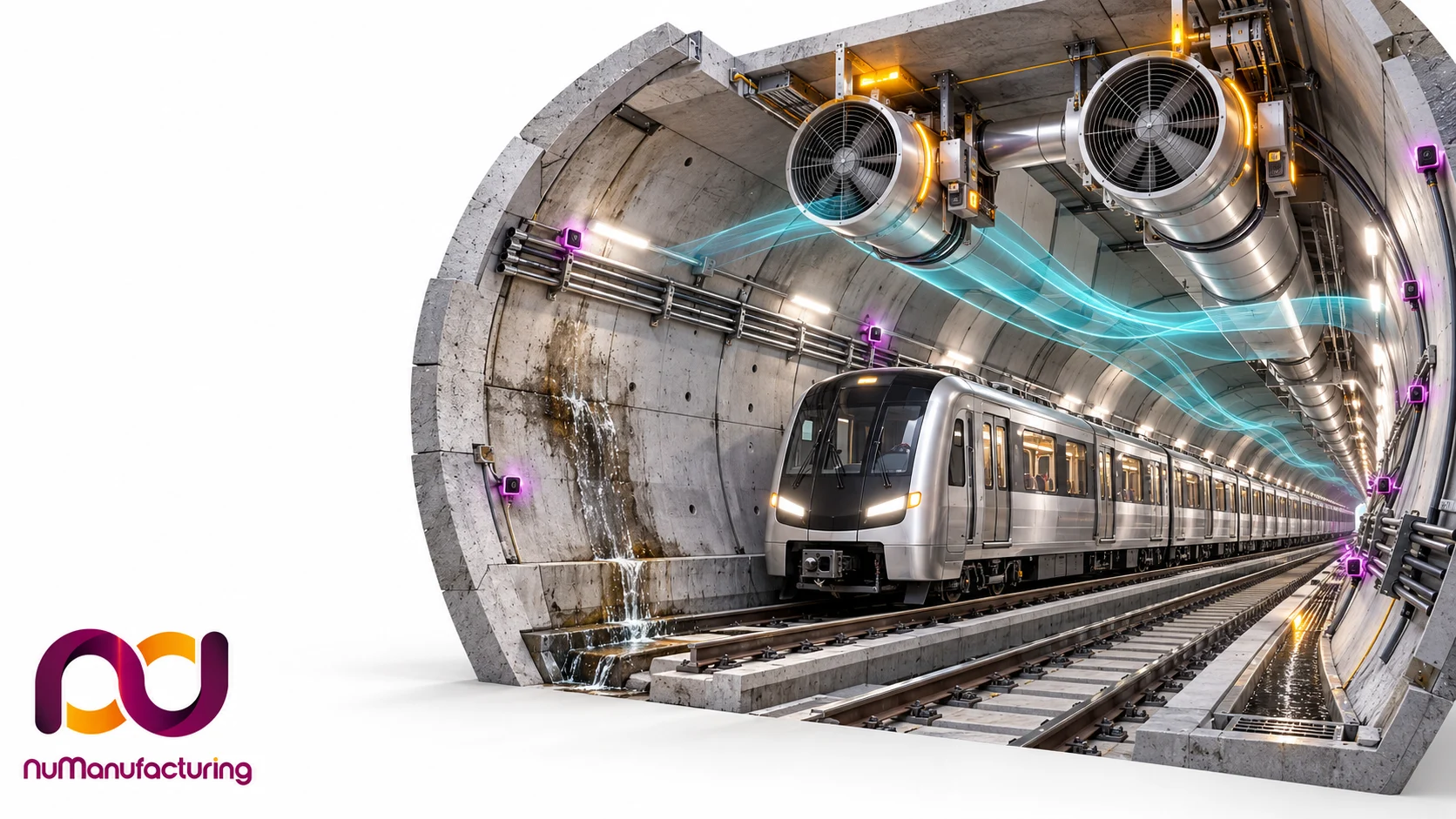
Evaluate energy consumption together with operating conditions.
How much energy equipment uses matters, and so do the conditions it runs under. Energy data from ventilation, pumps, lighting and auxiliary facility systems is analysed together with operating hours, load status and relevant field measurements.
The aim is to make unnecessary run times, consumption deviations and behaviour that may require maintenance visible.
Key functions
- Consumption tracking by system and equipment
- Performance comparison under similar operating conditions
- Alerts for abnormal consumption and operating behaviour
- Measuring the effect before and after an improvement
Operational value: Helps energy and maintenance teams set priorities from the same data.
Model tunnel airflow with field data.
Air movement in a tunnel is assessed by considering tunnel geometry, train movements, fan operating conditions and environmental measurements together.
Air velocity, pressure, temperature and related environmental measurements taken at points defined within the project scope are used to build the model and compare it with field conditions. The measurement set and the CFD modelling scope are defined according to existing engineering data and the operator's needs.
Key functions
- Monitoring air movement at critical points
- Comparing fan operating scenarios
- Evaluating model results against field measurements
- Examining ventilation performance and energy consumption together
Operational value: Supports ventilation decisions with measurement and modelling.
Track where water leaks are and how they develop.
Regular monitoring of water leaks on tunnel walls helps maintenance teams set intervention priorities.
Using imaging, humidity and water detection methods selected for site conditions, the goal is to detect signs of leakage, associate them with location and track how they change over time. Sensor selection depends on surface structure, access, lighting and leak characteristics.
Key functions
- Recording leak findings by zone
- Tracking newly appearing or progressing signs
- Providing location and event information to maintenance teams
- Comparing the condition after an intervention
Operational value: Supports prioritising site inspections and maintenance work.
Processing on site. Joint analysis. Central visibility.
Numanufacturing’s Sensor Fusion approach evaluates measurements from different sources in a shared operational context. The NumBox Edge AI platform supports processing data on site. The Physical AI approach connects physical infrastructure conditions with operating and maintenance decisions; these solutions are scoped to analysis and decision support.
Field data
Energy meters, environmental sensors, imaging and existing automation data
NumBox Edge AI
Data acquisition, time alignment, pre-processing and local analysis
Analytics
Consumption deviations, airflow assessment and leak events
Operating systems
Monitoring screens, alerts, reports and maintenance workflows
Example solution architecture. Sensors, communications and integration scope are defined through a site survey.
Integration with SCADA, BMS and maintenance management systems is designed around available interfaces and the organisation’s data policies. Local processing and on-premise deployment options are evaluated according to project needs.
Start with a measurable pilot.
Site and data discovery
The priority use case, existing infrastructure and baseline are identified.
Pilot design
Measurement points, sensors, integrations and success criteria are selected.
Field validation
Measurements and analyses are evaluated under real operating conditions.
Impact and scale-up
Results are compared with the baseline and the scope of expansion is defined.
Evaluation topics
- A suitable baseline for energy consumption comparisons
- Agreement between the airflow model and measurements
- Leak detection and false alarm rate
- Usability of the data for maintenance teams